Amenemhab’s secret writings on the art of war
Theodosia and the Serpents of ChaosAmenemhab’s secret writings on the art of war are a rubbing of tablets found in an opened section of a pyramid, and they make the book’s connection between military strategy and supernatural destruction explicit. Preserved on a long parchment, the text describes ways to bring an enemy low through curses, amulets, and secret rituals. Its historical subject is warfare in Thutmose III’s reign; its more alarming teaching is how that power might persist beyond the battlefield and even beyond the ruler’s lifetime.
Discovery and Physical Form
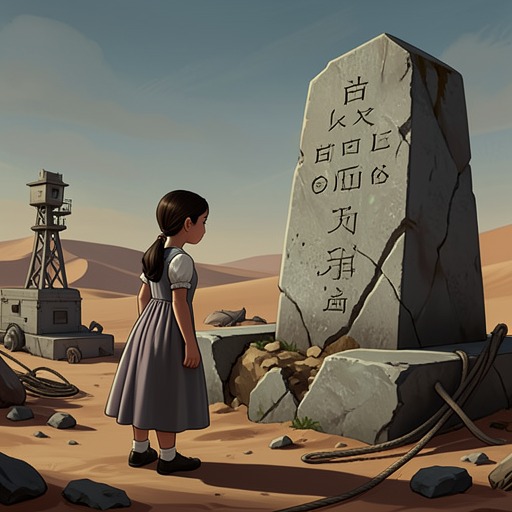
Henrietta Throckmorton presents the document to Theodosia as a rubbing made from tablets discovered in the section of a pyramid the expedition had opened. The object is therefore a copy of carved writing rather than the tablets themselves. Henrietta brings it out of her traveling satchel as a long, rolled-up parchment, and Theodosia unrolls the thick paper to see rows of hieroglyphs across its surface. The form matters: a text removed from a monumental setting has become portable, readable, and available for close study at home.
Henrietta reads the first line as “How to Cast Your Enemies into Chaos,” a title that makes the text’s purpose sound less like abstract military scholarship than a manual for deliberately producing disorder. Theodosia welcomes the gift with excitement, reaches for the parchment, and embraces her mother. The scene gives the writing a personal as well as historical significance: it arrives not as a museum object on display, but as a document Henrietta has brought back for her daughter to read.
Historical and Military Content
The writings sit within a larger record of Thutmose III’s campaigns. Henrietta describes the walls as covered with detailed histories of every war he fought, including his victories and strategies, and expects that deciphering all of this material will take years. Theodosia privately thinks she could help finish the work in months. That contrast establishes both the scale of the discovery and her confidence in her ability to interpret Egyptian writing; the rubbing offers her a direct encounter with one piece of a much larger historical archive.
The surrounding material evokes a military culture saturated with weapons and divine references. Henrietta reports finding spears, daggers, and long swords, many carved with Apep and Mantu. When Theodosia later reads the parchment, its invocation addresses Seth, Mantu, and Anat, asking them to hear pleas against enemies. The text thus places war within a religious framework: victory and violence are presented not only as matters of weapons and tactics, but as powers sought through divine appeal and ritual language.
The Writing’s Method of Destruction
Reading the document alone in her room, Theodosia follows its account of how to bring death and destruction upon enemies. Its methods include famine, plague, flood, locusts, and pestilence, alongside curses, amulets, and secret rituals intended to force an enemy to submit. This catalogue moves the text beyond a record of past battles. It presents devastation itself as a strategy, one capable of acting on a population through calamity rather than through direct combat.
The writings’ mixture of historical record and occult practice sharpens that implication. The text associates the power of the land with Thutmose III’s rule and describes enemies bowing and pleading for mercy. In Theodosia’s reading, military success and magical harm belong to the same design: ritual is a means of securing political dominance. The document’s title promises chaos, while its contents supply concrete forms that chaos can take, from failed harvests and disease to destructive floods.
Connection to the Heart of Egypt Curse
The later explanation of the Heart of Egypt curse gives the writings a wider political consequence. Lord Wigmere identifies the curse as a design for weakening a nation and making it easier to conquer, and attributes its creation to Amenemhab, Thutmose III’s minister of war. He explains that the curse was intended to ensure the power and glory of Thutmose III’s kingdom even after the king’s death. Whoever removed the Heart of Egypt from its tomb would bring famine, plague, pestilence, and destruction upon their own head.
This explanation closely echoes the methods Theodosia has already encountered in Amenemhab’s writings. The text describes calamity as a weapon against enemies; the curse makes that logic operate on a nation connected to the removal of the Heart of Egypt. The connection does not make the parchment itself the cause of the curse. Rather, the writings disclose the strategic thinking associated with Amenemhab, while Wigmere’s account identifies the curse as a specific instrument of that thinking and explains its intended political effect.
Narrative Significance
The document changes the scale of what Theodosia is learning. At first, its hieroglyphs offer the appeal of a newly discovered text and a chance to read material her parents have only begun to decipher. As she studies it, the parchment reveals a theory of warfare in which curses and natural disasters can be deliberately directed against enemies. Wigmere’s later explanation then makes that theory relevant to the immediate crisis surrounding the Heart of Egypt.
Its importance lies in this joining of scholarship and danger. The walls preserve the campaigns and strategies of Thutmose III; the rubbing gives Theodosia access to Amenemhab’s methods for turning destruction into policy. The document therefore supplies historical context for the curse and foreshadows the consequences Wigmere describes, while remaining, in the scene of its presentation, a mother’s gift that Theodosia eagerly carries off to read.